1–4 SEPTEMBER, 2026
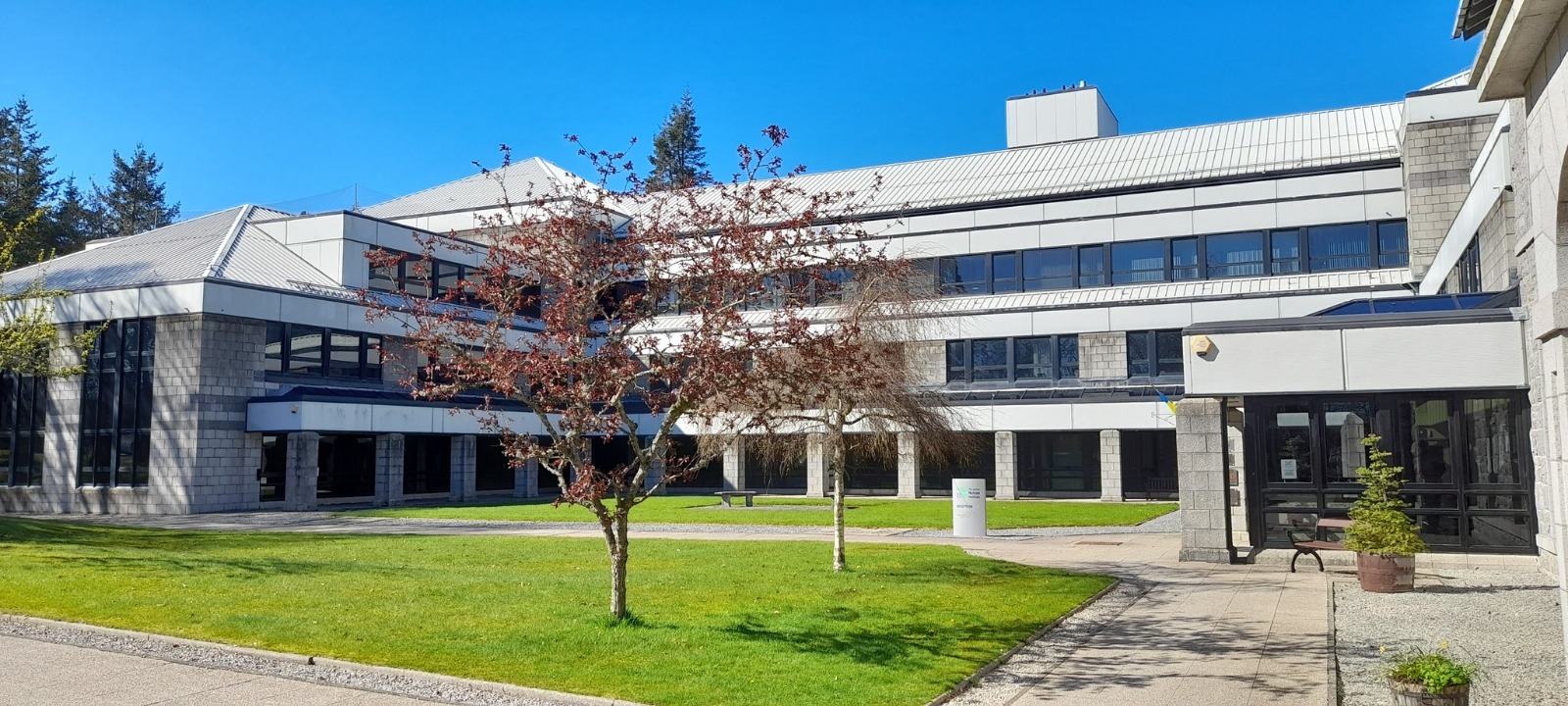
The International Land Use Study Centre (ILUSC) at THE JAMES HUTTON INSTITUTE, ABERDEEN, SCOTLAND
XI International Conference on
Localised Agri-food Systems
“Pivoted towards the future:
how can localised food systems be supported and
future-proofed to thrive in the face of current and future challenges?”
In its eleventh edition, the Conference aims to provide a participatory and reflexive space that brings together academics, practitioners, policymakers, social movements, local producers and youth to collectively explore where localised agri-food systems stand today; how they are shaped by and shape their territories; and how to future-proof them in full in the context of future challenges and shocks.
Societies worldwide face significant social and economic challenges in ensuring the sustainability of its environmental systems, while at the same time making healthy and nutritious food accessible to and consumed by all. Furthermore, the unprecedented threats from climate change, combined with other disruptive events, are making agrifood systems and their related food supply chains increasingly vulnerable to extreme shocks.
While current localised agri-food systems can be part of the solution, they themselves are not immune to the many developing issues (e.g. the rise of techno-authoritarianism, state rollback, disinformation, labour shortages worsened by anti-immigration policies, the societal loss of time, poor access to land and the loss of agricultural land to other uses, cost of living crises, etc) arising from very same techno-capitalist regimen to which they are trying to provide an alternative. These crises are interrelated and multidimensional — environmental, economic, social, political and cultural — and they often intersect deeply with issues of gender, generational inequality and territorial marginalisation. As a result, the ability of localised food systems to thrive and become a sustainable part of the solution may be threatened.
How could relocalised practices & infrastructure, governance arrangements, and socio-cultural meanings that support local food systems thrive in the face of multiple current and future inter-related challenges? What are the most pressing challenges, and how can LFS be future-proofed against them?
The conference is placing special attention on discussing evidence and theory that increase our understanding of where localised food systems are now, their status in different parts of the world, and how to future-proof them. By doing so, the 11th edition of this conference seeks to strengthen dialogues across academia, policy, and civil society with the aim of imagining and working towards plural futures in which localised food systems can thrive and support a sustainable good food system for all.
The key thematic tracks of the XI International Conference on Localised Food Systems would therefore consist of:
Theme 1 – Mapping Territorial Trajectories of Localised Food Systems
Key sub-themes may include:
Comparative territorial analyses of LFS across regions (Global North, Global South, rural, peri-urban, urban)
Political economies of localisation: state support, state rollback, neoliberalisation, and techno-authoritarian governance
Land access, land concentration, land grabbing, and loss of agricultural land
Cultural meanings of “local food” and how they differ across contexts
The role of history, colonial legacies, and path dependencies in shaping LFS trajectories
Mapping threats: financialisation, corporate capture, digital platforms, disinformation, and supply-chain consolidation
Guiding questions:
Under what political and institutional conditions do LFS thrive?
Where and why are LFS being marginalised or co-opted?
How do territorial inequalities shape the possibilities of relocalisation?
Theme 2 – Territorial Responses to Intersecting Crises
How are LFS responding to climate, economic, social, and governance crises—and with what outcomes? This theme track seeks to examine real-world responses, innovations, and struggles of LFS in the face of multiple, overlapping crises.
Key sub-themes may include:
Climate adaptation and mitigation strategies in localised food systems
Responses to labour shortages, migration restrictions, and demographic change
Community-based responses to cost-of-living crises and food insecurity
Governance experiments: food policy councils, municipal food strategies, commons-based governance
Digitalisation and automation: risks and opportunities
Crisis responses during shocks (pandemics, wars, climate extremes)
Guiding questions:
Which responses strengthen resilience, and which reproduce inequalities?
Who benefits and who is excluded from current LFS responses?
What lessons can be drawn from failures as well as successes?
Theme 3 – Valuing Localised Food Systems and Local Territories
What is the evidence of LFS contributions to sustainability, justice, and food security? This theme track centres on valuation, recognition, and evidence-building, moving beyond narrow economic metrics.
Key sub-themes may include:
LFS contributions to resilience, agroecology, biodiversity, and ecosystem services
LFS and the Right to Food, food sovereignty, and food democracy
Social and cultural values: care, trust, identity, and knowledge transmission
Gendered, generational, and Indigenous perspectives on value and contribution
Measuring and communicating impacts: methodologies, indicators, and narratives
Tensions between scaling up, scaling out, and staying local
Guiding questions:
How can the multiple values of LFS be made visible and politically legible?
What kinds of evidence matter to policymakers, communities, and social movements?
How do valuation frameworks risk excluding informal or marginalised food practices?
Theme 4 – Facing the Storm Ahead: Future-Proofing Localised Food Systems
How can LFS anticipate and withstand future technological, socio-political, and ecological shocks while remaining just and inclusive? This forward-looking theme track addresses anticipation, preparedness, and transformation.
Key sub-themes may include:
Anticipating climate extremes, geopolitical instability, and supply-chain disruptions
Technological futures: AI, automation, digital surveillance, and data governance
Preventing corporate capture and techno-authoritarian co-optation of LFS
Intergenerational renewal: youth participation, training, and succession
Social justice and inclusion in future LFS transitions
Building solidarity networks across territories and movements
Guiding questions:
What does “future-proofing” mean without sacrificing justice and sovereignty?
How can LFS remain adaptive without becoming exclusionary or elitist?
What institutional and cultural infrastructures are needed for long-term resilience?
How can technology be harnessed in ways that are supportive of sustainable, community-driven food systems rather than reinforcing centralised power structures?
What are the opportunities and challenges for integrating local knowledge with new technologies in food production, distribution, and consumption?
Deadlines & key dates
Call launched
20th January 2026
Abstract submission deadline
14th May 2026
Latest notification of acceptance
20th May 2026
Early bird registration
5th May - 15th June 2026
Regular registration
16th June – 30th July 2026
Final date for registration
30th July 2026
Conference dates
1–4 September 2026
Call launched
20th January 2026
Abstract submission deadline
14th May 2026
Latest notification of acceptance
20th May 2026
Early bird registration
5th May - 15th June 2026
Regular registration
16th June – 30th July 2026
Final date for registration
30th July 2026
Conference dates
1–4 September 2026
Plenary Speakers
We are delighted to welcome the following Plenary Speakers:
Professor Roberta Sonnino
Professor of Sustainable Food Systems
University of Surrey
England, UK
Dr. Roberta Sonnino is Professor of Sustainable Food Systems at the University of Surrey. Over her career, she has produced more than 100 publications on food systems, some of which have been translated into French, Italian, Portuguese, Japanese and Korean. Professor Sonnino has an established track record of creating impact and engagement at the interface of food systems research and policy. In recent years, she has been Vice-Chair of the FOOD2030 Expert Group, which led the development of four priority areas of the FOOD 2030 European research framework; lead author of FAO’s Framework for the Urban Food Agenda; and Rapporteur of the High-Level Expert Group assembled by the EC to explore ways to improve food systems governance through more effective science-policy-society-interfaces. Professor Sonnino is currently principal investigator of the €12m FOODCLIC project, funded by the European Commission’s Horizon Europe Programme, researching the transformation of food systems in European and African city-regions.
Dr. Isabelle Darmon
Lecturer in Sociology and Sustainable Development
University of Edinburgh
Scotland, UK
Dr Isabelle Darmon is a cultural and environmental sociologist at the School of Social and Political Science, University of Edinburgh, working across cultural sociology, critical theory and sociology of global environment and sustainability. Her recent research theorises dynamics of inequality and unsustainability under late capitalism. She co-convenes a European network of food sociologists with which she has just edited a special issue reframing social sustainability in the context of the inequality-unsustainability nexus, and is part of a large project accompanying the Scottish Government (as well as local authorities) on its new food legislation (the Good Food Nation Act). She teaches on capitalism and environment at undergraduate and postgraduate levels.
Dr. Adam Calo
Assistant Professor, Geography, Planning and Environment
Radboud University
The Netherlands
Dr Adam Calo is Assistant Professor of Environmental Governance and Politics at Radboud University in the Netherlands. His research explores the link between land governance and food systems transformation. He writes the academic newsletter Land Food Nexus and produces the podcast Landscapes.
Registration fees
Student
(members & non-members)
Early Bird Rate: Between 5th May – 15th June 2026
£100
Standard rate: 16th June – 30th July 2026
£120
Academic & practitioners from Latin America, Africa, Asia.
(Members)
Early Bird Rate: Between 5th May – 15th June 2026
£200
Standard rate: 16th June – 30th July 2026
£220
Academic & practitioners from Latin America, Africa, Asia.
(Non-members)
Early Bird Rate: Between 5th May – 15th June 2026
£220
Standard rate: 16th June – 30th July 2026
£240
Academic & practitioners (elsewhere)
(Members)
Early Bird Rate: Between 5th May – 15th June 2026
£480
Standard rate: 16th June – 30th July 2026
£300
Academic & practitioners (elsewhere)
(Non-members)
Early Bird Rate: Between 5th May – 15th June 2026
£290
Standard rate: 16th June – 30th July 2026
£310
Early Bird Rate: Between 5th May – 15th June 2026
Standard rate: 16th June – 30th July 2026
Student
(members & non-members)
£100
£120
Academic & practitioners from Latin America, Africa, Asia.
(Members)
£200
£220
Academic & practitioners from Latin America, Africa, Asia.
(Non-members)
£220
£240
Academic & practitioners (elsewhere)
(Members)
£280
£300
Academic & practitioners (elsewhere)
(Non-members)
£290
£310
We are pleased to offer a limited number of Registration Fee Waivers to applicants who would otherwise be unable to attend the XI Localised Agri-Food Systems Conference in Aberdeen.
Fee waivers cover the 4-day conference registration fee.
Eligibility requirements:
Applicants must:
Be presenting at the XI Localised Agri-Food Systems Conference in Aberdeen.
Identify as one or more of the following (no single category required):
Early Career Researcher (student or within 5 years of degree completion)
Independent or unaffiliated scholar
Precariously employed academic (adjunct, temporary, part-time, or short-term contract)
Researcher or practitioner based in an institution with limited funding opportunities
Application procedure:
To be considered, the following materials must be submitted to info@xi-conferencesyal.com by 1st May 2026:
A current CV
Contact details (email address, phone number).
Title of accepted contribution.
Names of co-authors (if applicable).
A short outline (max 300 words) of: i) the reasons you are seeking the conference fee waiver (any personal circumstances and/or financial limitations); and ii) how attending the XI Localised Agri-Food Systems Conference will support your research, creative practice, community work, or professional trajectory
Applicants will be notified of decisions by 15th June 2026.
Venue
THE JAMES HUTTON INSTITUTE, ABERDEEN, SCOTLAND
The James Hutton Institute is an interdisciplinary scientific research organisation based in Scotland but working in collaboration across the globe. The institute, named after Scottish geologist James Hutton, one of the leading figures of the Scottish Enlightenment, combines existing Scottish expertise in agricultural research, soils and land use, and works in fields including food and energy security, biodiversity, and climate change. With more than 600 employees, the institute is among the largest research centres in the UK.
Participants are responsible for arranging their own accommodation in Aberdeen. A wide range of hotels and short-term rentals are available across the city.
Getting to Aberdeen:
By Train: Aberdeen railway station is well connected to Edinburgh, Glasgow, and London via ScotRail and LNER services.
By Air: Aberdeen International Airport (ABZ) is approximately 20 minutes from the city by taxi or bus.
By Bus: Long-distance coach services connect Aberdeen to major UK cities.
Getting to the James Hutton Institute:
By Taxi:
The James Hutton Institute Craigiebuckler Aberdeen AB15 8QH United Kingdom
By Bus:
From Aberdeen railway station:
Bus 11A (approximately every 40 minutes)
Bus 5 or Bus 6 (approximately every 15 minutes; requires a longer walk)
Bus 15 (approximately every 40 minutes)
From Aberdeen Airport:
Bus 727, then transfer to Bus 11A (approximately every 40 minutes)
From Aberdeen long-distance bus station (Union Square):